Guide contents
Market size
How much is contracted in a category, by year and buyer.
Market size
Market size, Market share and Expiring contracts answer the three questions that decide where a bid team spends its year: how big a category is and whether it is growing, which suppliers gained and lost value last year, and what expires inside the bid window and who holds it. Each is computed when you open it — two or three aggregates over the same contract notices you can browse under Contracts — so there is no build to wait for and no figure older than the last data load. How to narrow each one is under Choosing the scope.
Market size is how much is contracted in a category, over the last 1, 3, 5 or 10 financial years.
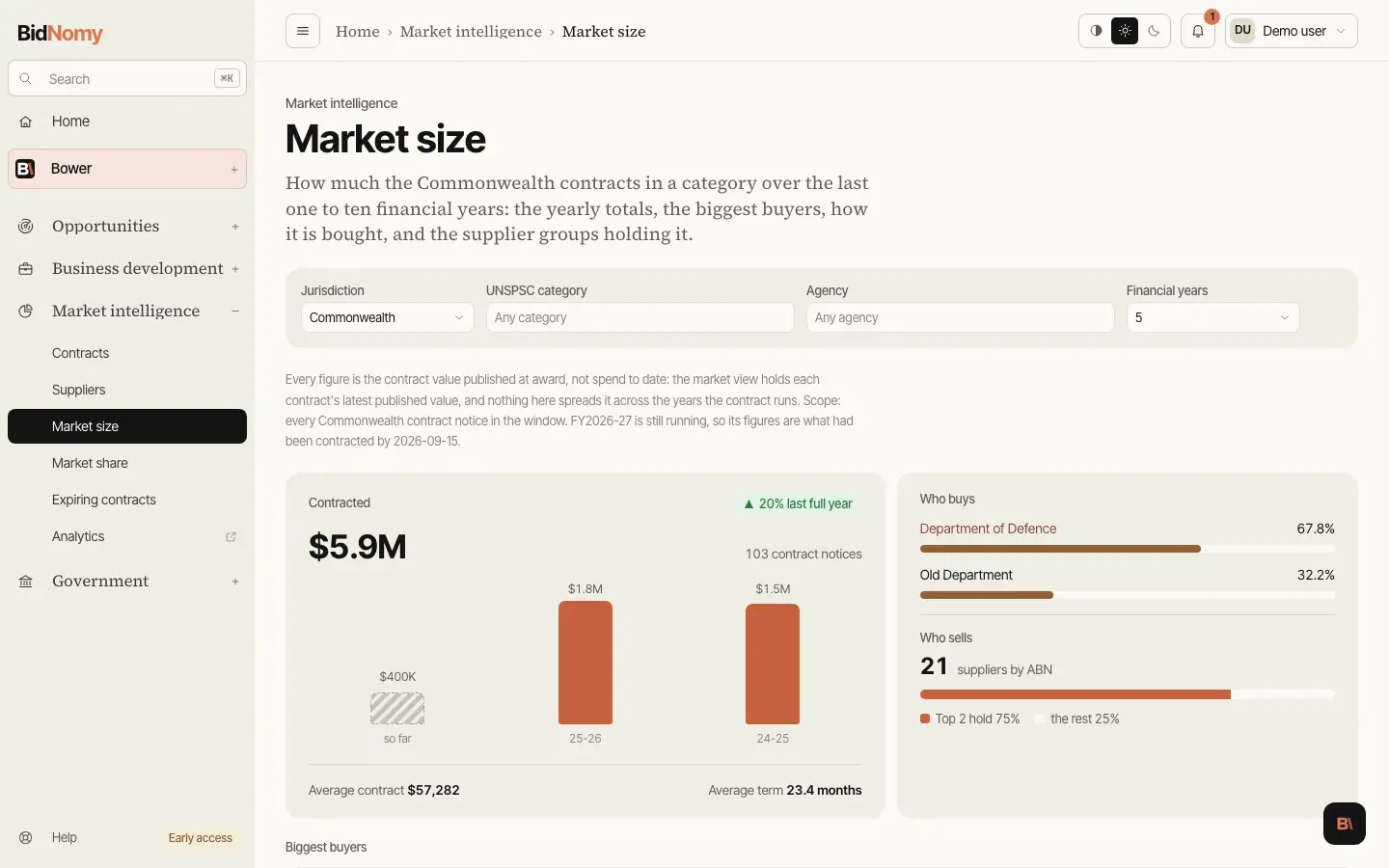
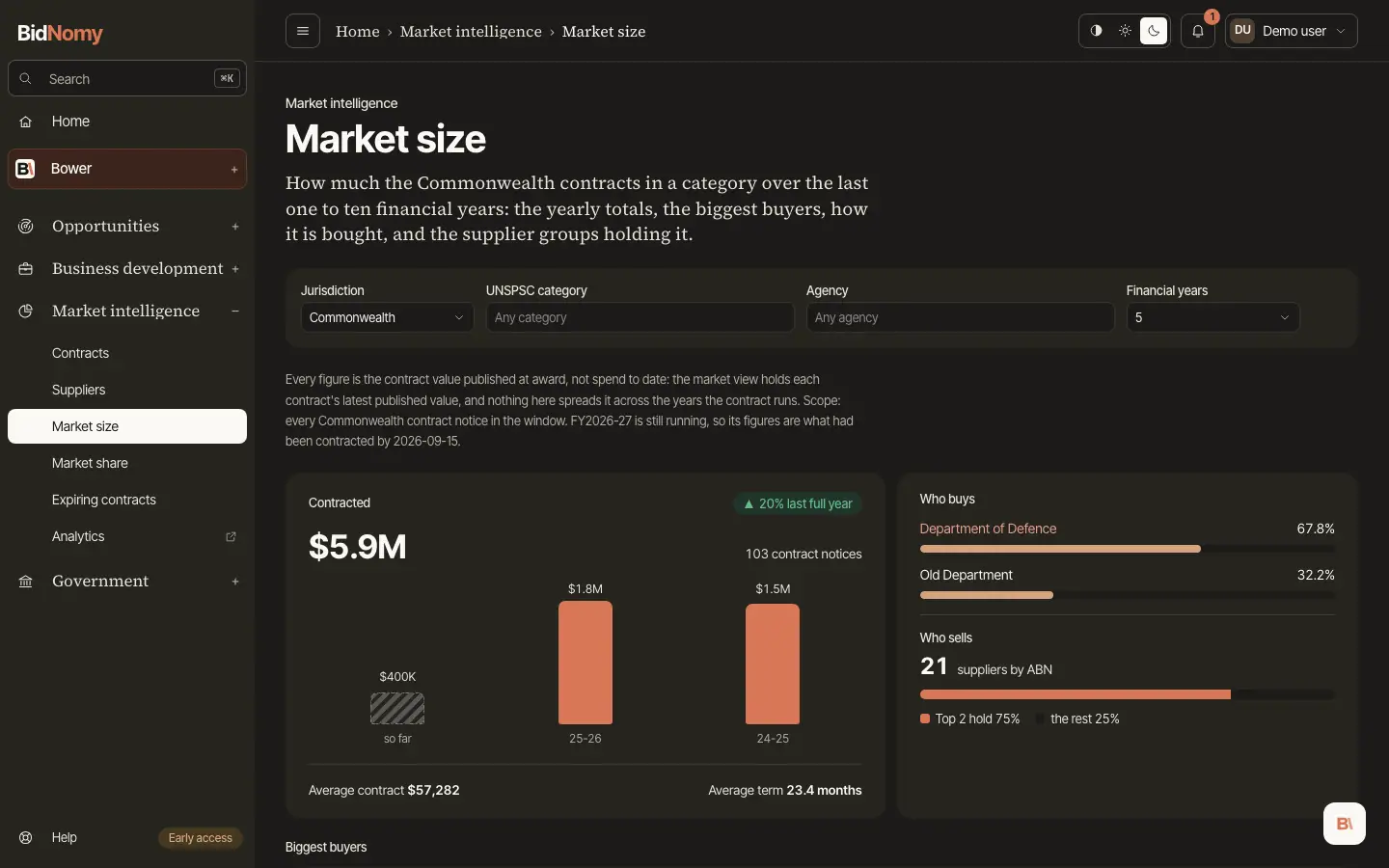
- Contracted — the left panel: the total for the window and how many notices make it up. At the top right, the change between the last two complete financial years; hover it to see which two. Below, one column per financial year, newest on the left, with its value above it. The year still running is striped and labelled "so far", since it holds only what has been contracted to date. Under the columns are the average contract and the average term. These columns replace the old "By financial year" block, which is no longer on the page.
- Who buys — the right panel: the three agencies that contracted the most, each with its share of the window total.
- Who sells — under it: how many suppliers by ABN won work, and how much of the window the ten biggest supplier groups hold between them, against the rest. A piece with no data is left out, and so is a panel with nothing in it. A state's panels say Awarded; ACT payments' say Paid, Who pays and Who is paid.
- Biggest buyers — the ten agencies that contracted the most, each linking to its entity page.
- How it was bought — open, limited, selective and a fourth bar for everything else, including the notices that publish no method at all. Three-bar versions of this chart quietly under-report every year by whatever that fourth bar holds.
- Biggest suppliers — the ten supplier groups by value, with each group's share of the window.